Manufacturing, Higher Education Strengthen Alliance, Looking Toward Future Jobs

As the New Haven Manufacturers Association celebrates its 100th anniversary in 2013, the future is looking up for an industry that has long been seeing at its heyday in the rear-view mirror.  There has been greater recognition that high tech manufacturing brings opportunities to attract and maintain jobs in Connecticut, and heightened connections between higher education and the manufacturing industry is reflecting the new approach.

That was evident when a fledgling initiative between NHMA and Southern Connecticut State University quickly filled to capacity in its pilot year.  NHMA and SCSU teamed up to sponsor a three-day program acquainting area science teachers with modern manufacturing and materials engineering methods this summer that officials hope will become an annual program.

The Materials & Manufacturing Summer Teachers' Institute, a collaboration that also includes Platt Technical High School in Milford and CRISP (Center for Research on Interface Structures and Phenomena at Yale University and Southern), attracted 30 science teachers from grades 7 to 9. NHMA

The program was designed to enable teachers to better educate middle school students about the relationship between STEM and manufacturing and what types of careers are available in the manufacturing field. Officials say that grade level was specifically targeted because students often decide as early as the middle school years whether or not to pursue math and science in high school, college and even in terms of career paths. More than 40 Connecticut teachers applied to attend the program, which could only accommodate 30 this summer.

Christine Broadbridge, chairwoman of the Physics Department at Southern and education director at CRISP, says area manufacturers and academics have been working for the past year to bring teachers, engineers and scientists together in more effective ways.

"We've learned from the teachers that they value relationships with industry," Broadbridge says. "At this institute, the teachers have found out about potential careers for their students as they learn about engineering and cutting-edge science. It has given them an opportunity to network with industry leaders and to gain hands-on knowledge about manufacturing. We hope they can bring that excitement back to their students."

Gregory W. Gray, the recently installed President of the Connecticut State Colleges and Universities, which includes 17 institutions across Connecticut, told the Connecticut Post this week that he wants the community colleges to take on a more aggressive workforce-development mission by expanding a manufacturing technology program that exists now on a few campuses, including Housatonic Community College (Bridgeport), Naugatuck Valley Community College (Waterbury) and Quinebaug Valley Community College (Danielson).  The program expanded a year ago, based on a very successful program offered at Asnuntuck Community College in Enfield.

There are almost 5,000 manufacturing commaterials-sciencepanies in Connecticut, according to the U.S. Census Bureau, and Connecticut manufacturing employees are 20 percent more productive than competing states, data from the state’s Department of Economic and Community Development indicates, as featured on the ConnSCU website.

The New Haven Independent recently reported on a New Haven company that is very much a part of the future of New Haven manufacturing. That future lies in specialization, in the rapid turnaround of high-tech niche parts, the Independent reported, according to Bill Neale, head of the New Haven Manufacturers Association and vice-president of operations at Radiall manufacturing on John Murphy Drive in the Fair Haven section of the city. The factory isn't trying to compete with massive operations in places like China and India, Neale said. It’s advantage lies not in productivity, but in speed and specificity.

Governor Malloy announced in June that state’s Advanced Manufacturing Centers at the three community colleges will receive $7,325,000 in funding for facility and equipment upgrades that will allow the centers to enhance and develop their educational opportunities. The funding was approved by the State Bond Commission.  According to ConnSCU, the funds would be allocated:

  • $1.5 million for Housatonic Community College to add a welding lab to their manufacturing center. HCC continues its work with its Regional Advisory Board to confirm the need for skilled welders in the region, including the review of options for virtual equipment and the pursuit of appropriate faculty expertise for student learning.
  • $825,000 for Naugatuck Valley Community College to add additional manufacturing equipment to the existing advanced manufacturing center, retrofitted to support local industry needs including the purchase of a deep draw press.
  • $5 million for Quinebaug Valley Community College to build an advanced manufacturing center on their campus in Danielson. For the first year, QVCC has worked with nearby Ellis Technical High School to utilize existing space until the college could grow the program and obtain funds for construction on its own campus. The funding will be used for construction, as well as for the purchase of machinery and other manufacturing equipment.

NHMA was founded in 1913 as the Employer's Association of New Haven County. Today the organization serves businesses, especially manufacturers, in the entire Southern Connecticut region and beyond. They’ll be celebrating a century of operations - looking forward - with a gala on September 19 at Housatonic Community College in Bridgeport.

Motorcycle Accidents in CT and US Prompt Calls for Re-look at Helmet Laws

On August 2, Route 30 in Vernon was closed for a time following a serious motorcycle accident.  Emergency officials told WFSB-TV that the motorcycle and a dump truck collided.  Three days later, police confirmed to WTNH-TV that Lifestar responded to a motorcycle accident on Route 202 in Litchfield, closing that road.  Police described the injuries as being serious.

Yesterday, a Middletown motorcyclist was hospitalized after a traffic accident.  Middletown Police said “The motorcycle struck the struck the Pathfinder, the rider was ejected and he and the bike came to rest underneath a tow truck parked on the side of the road.”  In the latest incident, the injuries were said to be non-life threatening, the Middletown Press reported.

From the beginning of June through mid-July, however, motorcycles have been involved in three deaths in the Fairfield County according to the Greenwich Time — two in New Milford and one in Danbury – as well as several injuries. The paper reported that “the recent fatalities have thrown long-standing debates over Connecticut’s partial motorcycle helmet laws into a new light, prompting questions as to the efficacy of helmets and the future of statewide regulations requiring their use.”

In one incident – where the rider survived – the Time reported that “the bike burst into flames shortly after it collided with oncoming traffic, and its rider was thrown nearly 10 feet into the street.”

In Texas this week, the Fort Worth Star-Telegram reported that “While other traffic deaths have been on the decline, motorcycle fatalities have been rising in Texas, according to the Texas Department of Transportation. Although down slightly last year to 460 people killed compared with 488 in 2011, annual motorcycle deaths in the state have increased 56 percent since 2004.

In Minnesota, July 2013 was especially deadly, “with 18 motorcyclists killed. That total has pushed the number of motorcyclists killed so far this year to 39, compared to 24 riders killed by this time in 2012,” in that state, according to reports published in the Minneapolis Star-Tribune.

Nationally there were about 4,550 deaths in 2012, doubling the amount in the mid-1990s, according to USA Today.  A report by consumerreports.org in June indicated that “in motorcycle-rider-accident2010, 98 percent of motorcyclists riding in states with helmet laws were wearing them. In states without the laws, helmet use was just 48 percent.”

A 2011 Yale School of Medicine report analyzing state crash data between 2001 and 2007 found that two-thirds of the 358 riders killed in motorcycle accidents had not been wearing helmets. In an editorial last month, the Greenwich Time noted that “the National Highway Traffic Safety Administration estimated that in 2008, helmets saved the lives of 1,829 motorcyclists, and that 822 who died that year would have survived if helmets had been worn.”

The Insurance Institute for Highway Safety reports that:

  • Laws requiring all motorcyclists to wear a helmet are in place in 19 states (including New York, New Jersey and Massachusetts) and the District of Columbia
  • Laws requiring only some motorcyclists to wear a helmet are in place in 28 states (including Connecticut, which requires helmets be worn by individuals 17 and under)
  • There is no motorcycle helmet use law in 3 states (Illinois, Iowa, and New Hampshire)

National Highway Traffic Safety Administration research shows riders who wear helmets are three times less likely to suffer brain trauma than those without them. According to a 2012 study released by the Centers for Disease Prevention and Control, motorcyclists accounted for 12 percent of motor vehicle fatalities in 2010, despite making up less than 1 percent of vehicle miles traveled, the Greenwich Time reported.

Motorcycle helmets have not been uniformly required in decades.  In 1967, to increase motorcycle helmet use, the federal government required the states to enact helmet use laws in order to qualify for certain federal safety programs and highway construction funds. The federal incentive worked. By the early 1970s, almost all the states had universal motorcycle helmet laws.

Michigan was the first state to repeal its law in 1968, beginning a pattern of repeal, reenactment, and amendment of motorcycle helmet laws. In 1976, states successfully lobbied Congress to stop the Department of Transportation from assessing financial penalties on states without helmet laws. The Connecticut General Assembly overturned the universal helmet requirement here later that year. The state passed its partial helmet law in 1989, applying only to individuals age 17 and younger.

In April 2013, Insurers and medical groups urged Michigan Gov. Rick Snyder and the Legislature to reinstate Michigan's motorcycle helmet requirement , citing a University of Michigan study showing it would have prevented 26 deaths and 49 injuries last year.

The higher risk of serious injury or death that comes with optional helmets may also translate into economic losses. NHTSA data reportedly suggests that projected reductions in fatalities stemming from universal helmet laws could translate into savings in service costs and household productivity of up to $1,200,000 per avoided fatality.

The Connecticut Motorcycle Riders Association (CMRA) , formed in 1980, opposes helmet requirements, as it has for more than three decades.  In the organizations view, it is a matter of freedom of choice – whether or not to wear a helmet is a decision to be made by bikers, not government. It was that view that prevailed when the legislature changed the state’s mandatory helmet law in 1977.  In 1980, motorcyclists rallied in unprecedented numbers in Connecticut when a state legislator was involved in a motor vehicle accident in which a motorcyclist was killed.

Since then, the issue has been raised unsuccessfully at the state Legislature in bills or amendments 11 times. The CMRA website said, regarding the 2013 session, that “we are able to say that we have not had to fight any helmet laws this year,” and indicated that “we have repeatedly defeated attempts to reinstate the mandatory helmet law for adult motorcycle riders.”  The issue has not been considered since 2005, according to the Time.  The CMRA website also includes this tagline:  “Let Those Who Ride Still Decide.”  The organization has supported the creation of a self-funded rider education program and pushed for the adoption of a more comprehensive motorcycle license test throughout the state, the website points out.


Half of Eligible Teenagers Delay Drivers License, Study Finds

In an unexpected sign of the times, about half of the teenagers in the U.S. who are old enough to obtain a drivers license are waiting to do so, according to a new survey.  The most common reasons cited for delayed licensure were not having a car, being able to get around without driving, and costs associated with driving.

The study, by the AAA Foundation for Traffic Safety, found that less than half (44 percent) of teens obtain a driver’s license within 12 months of the minimum age for licensing and just over half (54 percent) are licensed before their 18th birthday. These findings mark a significant drop from two decades ago when data showed more than two-thirds of teens were licensed by the time they turned 18, accordidelayed licenseng to AAA.

The report found “Large social and economic disparities in licensing rates and in the timing of licensure.” Low-income, African-American and Hispanic teens are the least likely to obtain a driver’s license before age 18.

Only 25 percent of teens living in households with incomes less than $20,000 obtained their license before they turned 18, while 79 percent of teens were licensed by their 18th birthday in households with incomes of $100,000 or more.

 The findings for licensure by age 18 also differed significantly by race and ethnicity, with 67 percent for non-Hispanic white teens, 37 percent for non-Hispanic black teens, and 29 percent for Hispanic teens.

Some had suggested that teens were waiting simply to avoid graduated driver’s licensing (GDL), missing both the limitations and benefits of the laws, which vary across states, aimed at improving new driver training and safety, and causing some concern.  The survey, however, did not find this to be a prominent reason in delayed licensing.  A number of other reasons for delaying licensure were cited, including:

  • 44 %– Did not have a car
  • 39 % – Could get around without driving
  • 36 %– Gas was too expensive
  • 36 % – Driving was too expensive
  • 35 % – Just didn’t get around to it

Many states impose the GDL restrictions only for new drivers younger than 18.  The AAA report indicated that “Given the  large proportion of new drivers who are 18 years old or older, further research is needed to investigate their levels of safety or risk, to evaluate the potential impacts of extending GDL systems to new drivers aged 18 and older, and to explore other ways to address the needs of older novice drivers.”

In Connecticut, anyone 18 years of age or older must hold an adult learner’s permit for 3 months before obtaining a driver's license.  The state Department of Motor Vehicles website outlines the procedures in Connecticut, which have been revised as recently as January 2013 based on new laws approved by the state legislature.

The proportion of teens who were licensed varied strongly by geographic region, the AAA study found: licensing rates were much higher in the Midwest (82%) than in the Northeast (64%), South (68%), or West (71%).

The study did not discern major variations by gender among teens.  Although males were slightly more likely than females to obtain a license within six months of their state’s minimum age (33% vs. 28%), females were actually slightly more likely than males to obtain a license within 1-2 months of their state’s minimum age.

The researchers surveyed a nationally-representative sample of 1,039 respondents ages 18-20. The full research report and results are available on the AAA Foundation for Traffic Safety website.

First McCarthy and Comey, Now Schwartz and Handelsman: Four CT Nominees for Obama Administration

All roads have been leading to Connecticut lately as President Obama has sought top talent for his administration.  Among key Presidential appointments announced by the White House last week was Linda Spoonster Schwartz, as nominee for Assistant Secretary of Veterans Affairs for Policy and Planning, in the Department of Veterans Affairs.  Schwartz is the fourth Connecticut resident and second who previously led a Connecticut agency, to be nominated recently by President Obama.

Linda Schwartz, a disabled veteran, has led the Connecticut Department of Veterans Affairs through Republican and Democratic administrations since 2003.  She concurrently serves as an Associate Clinical Professor of Nursing at the Yale School of Nursing, where she has been on Faculty since 1999 and was appointed Associate Research Scientist and Scholar.  From 1980 to 1993, she taught at several University and College Schools of Nursing and held leadership roles in Nursing organizations in Connecticut. Her nomination was sent to the Senate for confirmation on Aug. 1.

The White House alwhite hosueso announced last week that President Obama intends to nominate Jo Handelsman of Yale University as Associate Director for Science, Office of Science and Technology Policy.

 Dr. Jo Handelsman is the Howard Hughes Medical Institute Professor and Frederick Phineas Rose Professor in the Department of Molecular, Cellular and Developmental Biology at Yale University, a position she has held since 2010.  Previously, she served on the University of Wisconsin-Madison faculty as a Professor in Plant Pathology from 1985 to 2009 and Professor and Chair of the Department of Bacteriology from 2007 to 2009.

“The extraordinary dedication these individuals bring to their new roles will greatly serve the American people.  I am grateful they have agreed to serve in this Administration and I look forward to working with them in the months and years to come,” President Obama said in the formal announcement.

On July 17, the Senate confirmed the nomination of Gina McCarthy as Administrator of the Environmental Protection Agency.  McCarthy, gina-mccarthywhose nomination was held up for a time amidst political wrangling in Congress, has served as Connecticut’s Commissioner of Environmental Protection  prior to heading to Washington to join the EPA as assistant administrator earlier in the administration. McCarthy, is a 25-year veteran of state and local government in New England where she worked for Republicans including former Massachusetts Governor Mitt Romney and Connecticut Governor M. Jodi Rell.

The Boston Globe reported that the newly confirmed McCarthy told an audience at Harvard Law School that cutting carbon pollution will “feed the economic agenda of this country” and vowed to work with industry leaders on shaping policies aimed at curbing global warming.

In June, the President nominated James B. Comey, Jr., of Westport, to be Director of the Federal Bureau of Investigation for a term of ten years.  Comey was confirmed as the seventh director of the FBI on July 29 by a vote of 93-1 in the Senate.  He served in the Justice Department official in the Bush administration.

“To know Jim Comey is also to know his fierce independence and his deep integrity,” Obama said in making the nomination. “He’s that rarity in Washington sometimes: He doesn’t care about politics, he only cares about getting the job done. At key moments, when it’s mattered most,president-obama-nominates-james-comey-as-the-next-fbi-director he joined Bob in standing up for what he believed was right.”

Before serving as deputy attorney general, Comey was the U.S. Attorney for the Southern District of New York, where he helped bring down the Gambino crime family, and served as the managing assistant U.S. attorney in charge of the Richmond Division of the U.S. Attorney’s office for the Eastern District of Virginia, according to news reports.Handlesman

Handelsman is currently President of the American Society for Microbiology.  In 2011, Dr. Handelsman received the Presidential Award for Excellence in Science Mentoring.  From 2002 to 2010, Dr. Handelsman was the Director of the Wisconsin Program for Scientific Teaching.  In 2004, Dr. Handelsman co-founded the National Academies Summer Institute on Undergraduate Education in Biology.  She received a B.S. from Cornell University and a Ph.D. from the University of Wisconsin-Madison.

If confirmed by the U.S. Senate, Handelsman will help advise President Barack Obama on the impact of science on both international and domestic affairs.  “This is an enormous opportunity that I felt I just could not pass up,” she told the Yale  News.

“In addition to being a superb biologist, Jo Handelsman is nationally recognized as an exceptional mentor of young scientists and an effective champion for increasing diversity in the scientific work force,” Steven Girvin, deputy provost for science & technology at Yale told the News. “Her energetic devotion to improving science education is of critical importance to the nation.”

LindaSpoonsterSchwartzU.S. Sen. Richard Blumenthal released a statement calling Schwartz "a champion of veterans and a national star."  From 1979 to 1980, Schwartz was a caseworker in the Office of the Field Director of the American Red Cross at Rhein-Main Air Base in Germany.  Dr. Schwartz served in the United States Air Force (USAF) Nurse Corps from 1968 to 1986, both on Active Duty and as a Reservist.  She retired as a Flight Nurse Instructor, with the rank of Major after sustaining injuries in a USAF Air Craft accident.

In 2001, she served on the Board of Directors of the American Nurses Association and was elected to the American Academy of Nursing.  From 1996 to 2000, she served as a Member and Chair of the VA Advisory Committee on Women Veterans.  She received a B.S. from the University of Maryland, an MSN from Yale University School of Nursing, and a Dr.P.H from the Yale University School of Medicine.


Reducing Utensil Use on Campus Helps Sustainability Efforts

In a presentation earlier this year on the website TED, known for “Ideas Worth Spreading,” Dr. Michael Shaver of the University of Edinburgh suggested “saving the world one plastic fork at a time.”  Courtesy of Sodexo, the mammoth  international food service company, that’s exactly what Central Connecticut State University (CCSU) is doing.

CCSU now features utensil dispensers in their student center dining area, replacing the traditional bins and bunches of forks, spoons and knives.  The dispensers operate at the simple push of a lever.  They only eject one fork, knife or spoon with each action of the lever, rather than having customers dip their hands into a bin, only to pull out a fist-full of utensils.

This simple change to the single-touch dispensers, according to Sodexo, reduces the number of wasted utensils by over 40 percent, thus reducing the amount of plastic used on campus – which firmly places the university on the right side of sustainability efforts.  The dispensers now in use at CCSU indicate that "dispensing one fork at a time reduces usage by up to 49%," pointing out that "less is definitely more when it comes to sustainability."

The “greening” of the campus food service – driven by Sodexo at facilities across the nation – also includes napkins, which switched to a single dispensing system years ago.  Iphoton fact,  Sodexo announced in 2008 that after only one year, the program resulted in a 25 to 50 percent reduction in the actual number of paper napkins used - thanks to the introduction of dispensers that dispense a single napkin at a  time.

A  switch to recycled napkins in the company’s 1,300 food service operations nationwide has resulted in saving nearly ten million gallons of water, more than 23,000  trees, half a million gallons of oil and five and a half million kilowatts  of energy, officials report. The company began using two types of recycled napkins as part of a commitment to leadership in sustainability and to providing.

Central, as the other state universities, and more than 600 public and private institutions in Connecticut and nationwide, is a signatory to The American College & University Presidents Climate Commitment.  The official commitment signed by all members says in part, "We believe colleges and universities must exercise leadership in their communities and throughout society by modeling ways to minimize global warming emissions, and by providing the knowledge and the educated graduates to achieve climate neutrality."

The Connecticut institutions participating include:plastics generation

  • Central Connecticut State University
  • Connecticut College
  • Eastern Connecticut State University
  • Fairfield University
  • Middlesex Community College (CT)
  • Norwalk Community College
  • Southern Connecticut State University
  • Trinity College
  • University of Connecticut
  • Wesleyan University
  • Western Connecticut State University

According to the corporate website, Sodexo touches the lives of 75 million consumers in 80 countries every day. In North America alone, the company serves more than 15 million consumers at 9,000 client sites. In 2012, named 89 Sodexo-served colleges and universities among the nation's most environmentally responsible "green colleges." They were named to The Princeton Review's Guide to 322 Green Colleges: 2012 Edition, which profiles institutions of higher education in the United States and Canada that demonstrate notable commitments to sustainability.

By the way, if you’re looking for a one-at-a-time fork or spoon dispenser for your business, you can pick one up for $27.29 on Amazon.  The Knife dispenser goes for $8.89.

Organ Donation Draws Renewed Attention as Data Points to Acute Need

In the United States, 56 percent of the patients waiting for organ transplants are individuals of color, even though they account for 36 percent of the total population.

“While successful matching between donors and recipients does not take race or ethnic background into consideration, since we really all can help each other, more donors from all backgrounds will only result in fewer deaths on the waiting list,” says Caitlyn Bernabucci, Public Education Specialist for LifeChoice Donor Services. “Compatible blood and tissue types, which are a part of the donor and recipient matching process, are commonly found in people with similar backgrounds and ethnicities.”

To bring attention to the issue, August 1-7 is designated National Minority Organ Donor Awareness Week.  This is a nationwide observance to educate people of the need for donation and transplantation within the multicultural community, and how to register their decision to donate.

Today, nearly 199,000 people are on the national organ transplant waiting list. Largely due to the rarity of donation opportunities, only about 28,000 organs are transplanted each year. As a result, 18 people die each day due to the lack of a donor.

Currently, Hispanics/Latinos comprise 16% of the population, 19% of those waiting for a kidney, and 17% of those waiting for a liver, the federal agency reports.  According to the U.S. Department of Health & Human Services (HHS), African-Americans, Asians and Pacific Islanders, and Hispanics/Latinos are three times more likely than Caucasians to suffer from end-stage renal (kidney) disease, often as the result of high blood pressure and other conditions that can damage the kidneys. Almost 35 percent of the more than 95,000 people on the national waiting list for a kidney transplant are African-American.

In Connecticut, as of July 19, 2013, the waiting list for all organ transplants for Connecticut residents includes 1,368 individuals.  The ethnicity breakdown, according to official statistics, includes 668 whites, 457 blacks, 198 Hispanics, and 42 Asian.  Overall in Connecticut, individuals on the waiting list include 1,151 seeking kidney transplants, 192 awaiting liver transplants, 17 waiting for a pancreas transplant, and 25 hoping for a heart transplant.

HHS data indicates that in 201Waiting List by Ethnicity2, Hispanic recipients were 14.1 percent of the total organ transplants in the U.S, reflecting 15.8 percent of kidney transplants in the nation.  Among Hispanics, 66 percent of transplant recipients received kidneys and 22 percent received livers.  African-Americans received 19.9 percent of all organ transplants, including 24.8 percent of kidney transplants.  HHS reports that since 1996, the number of non-white donors has doubled.

“A disproportionately high number of minorities are currently in desperate need of an organ transplant. The need is so great in these communities mainly because diseases that cause end stage renal failure and the need for a kidney transplant, such as uncontrolled high blood pressure and diabetes, tend to impact this group more than others,” adds Bernabucci.

Although organs are not matched according to race/ethnicity, and people of different races frequently match one another, all individuals waiting for an organ transplant will have a better chance of receiving one if there are large numbers of donors from their racial/ethnic background. This is because compatible blood types and tissue markers—critical qualities for donor/recipient matching—are more likely to be found among members of the same ethnicity, the federal agency points out, adding that “a greater diversity of donors may potentially increase access to transplantation for everyone.”

Originally launched in 1996 as National Minority Donor Awareness Day on Aug. 1, the one-day observance became a week-long designation at the request of organ procurement organizations (OPOs) and other organ donation partners throughout the country, according to Texas organ transplant officials.

LifeChoice Donor Services, Inc. is the federally designated, non-profit organ procurement organization (OPO) for six counties in Connecticut and three counties in Western Massachusetts with a combined population of 2.2 million people.  The OPO serves twenty-three acute care hospitals for organ and tissue donation and two organ transplant hospitals, Hartford Hospital in Hartford, CT and Baystate Medical Center in Springfield, MA. Organ transplants include kidney, liver, pancreas, heart, lung and intestine.

Donate Life New England is a joint project of three federally designated organ procurement organizations that serve New England – New England Organ Bank, LifeChoice Donor Services, The Center for Donation and Transplant, the Connecticut Eye Bank, as well as Donate Life Connecticut. For more information about LifeChoice and to join the Donor Registry, please visit www.lifechoiceopo.org or call 1.800.874.5215.

Mapping of Introduced Legislation Shows Subjects of Most Interest

Wondering in which subject areas the greatest volume of proposed legislation was centered during the 2013 Connecticut General Assembly session?  There’s a map for that.

Data compiled and presented in a brightly colored, multi-layered, interactive display by the website Readily Apparent illustrates the leading legislative areas of focus, based on the number of bills introduced by lawmakers during the five-month session that concluded in June.

Leading the way in 2013 was Government Administration and Elections with 458 proposed bills, followed by Criminal Justice and the Courts with 320, Education with 248, Public Safety & Security with 194 and Public Health with 181.

In each of 23 subject areas, Readily Apparent “drills down” to break each subject into subcategories – visible with the click of a mouse.square map

In Government Administration & Elections, for example, the breakdown, also visually displayed, is 246 bills related to state government operations, 93 dealing with elections, 62 focused on the legislature, 29 on government contracts, 24 on municipalities, and 4 on regulated activities.  Each of those categories is subdivided further.  The “state government operations” category, for example, includes six distinct sub-categories.

In addition to the three levels of breakdowns, the website also provides a listing of all the bills introduced in each category, forming a comprehensive list of bills introduced to be considered by lawmakers during the legislative session.

The site describes the “What’s Getting Lawmakers Attention” tree-map interactive data display as providing a “30,000-foot view” of activity by policy area in the 2013 CGA session.

Readily Apparent co-founder Brendan Hanrahan’s primary interest, according to the website, “is in conveying new insights that can be gained with the use of relational data designs and dynamic graphics.  He has been exploring, designing and developing web-based applications for data management, analysis and visualization since 2004.

Quinnipiac, Eastern, Middlesex Among Nation's Great Colleges to Work For

The Chronicle of Higher Education has named three Connecticut institutions - Eastern Connecticut State University, Quinnipiac University and Middlesex Community College – as among the top schools in the country for the people who work there.

The Connecticut schools are among 97 institutions across the United States to achieve the title ‘‘Great College to Work For’’ in recognition of best practices and policies.

The results of the analysis, based on an institutional audit of demographics and workplace policies as well as a survey of more than 45,000 faculty, administrators and professional support staff at 300 colleges and universities, are part of the publications’ sixth annua2013GCWF_logol report.

Quinnipiac University reached the Chronicle’s great colleges to work for list for the first time; Eastern Connecticut for the fifth consecutive year.  Middlesex Community College debuted on last year’s list.

Among the “outstanding features” described by the Chronicle about Quinnipiac: “The university’s wellness initiative pits teams of employees against one another in friendly competition. Quinnipiac administrators say thquinnipiace atmosphere has lightened the mood at faculty meetings and helped employees maintain a more healthful lifestyle.”

Quinnipiac not only made the list, but earned a spot on the Honor Roll as well – one of just 10 medium-size 4-year colleges to do so.  Those institutions were described as “the best of the best.”  Quinnipiac was recognized in eight of the publication’s 12 categories:  Collaborative Governance, Compensation and Benefits, Confidence in Senior Leadership, Facilities, Workspace & Security, Job Satisfaction, Professional Career Development Programs, Respect and Appreciation, Teaching Environment, and Tenure Clarity and Process.

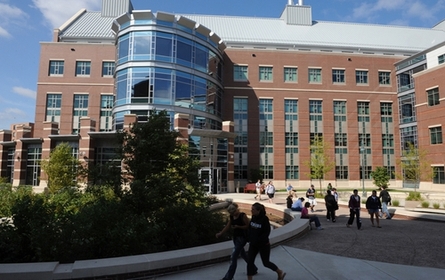
Eastern was noted in three categories: collaborative governance, compensation and benefits, and facilities, workspace and security.  Eastern was previously recognized in 2009, 2010, 2011, 2012.  Among the university’s “outstanding features,” easternaccording to the Chronicle,  are the university’s announcement in April of “plans for a 135,000-square-foot arts facility; it follows the 2008 construction of a new science building. Eastern Connecticut has been recognized by the Princeton Review as a “green college” for four years in a row.”

“Receiving this national recognition from the Chronicle of Higher Education each of the past five years is very gratifying, especially given our high ranking in three important areas of campus operations. The spirit of collaboration that exists on our campus is a strength that helps us better serve our students and the state of Connecticut,” said Eastern President Elsa Núñez.

Middlesex was recognized for its compensation and benefits along with  professional/career development programs. The Chronicle noted that “At Middlesex, faculty are not the only employees eligible for tenure. Exempt professional staff may also apply for and receive tenure after six years of working for the college.”

UConn the Latest to Proceed with Scoreboard Replacement; Controversy Erupts at Penn State

When the State Bond Commission voted last week to approve $2.8 million for repairs to Rentschler Field in East Hartford, home of the newly rebranded Connecticut Huskies, it was said that about $1.67 million of that money will be used to replace scoreboards at the stadium.

The Hartford Courant reported that Kim Hart, the venue director for the Capital Regional Development Authority, which overssees the state-owned facility, said that scoreboards like the main one at Rentschler are typically replaced every 7 to 8 years.  The main scoreboard at the Rent has been in place since the facility opened, a decade ago.

“It’s outlined its useful life and we’ve squeezed a few years out of it,” she was quoted as saying.

For sports fans accustomed to seeing stadium scoreThe Rentboards in place for well over a decade at venues across the nation, the statement may have been jarring.  But apparently, new technology is driving new scoreboard purchases at colleges coast-to-coast – and at costs considerably higher than in Connecticut.

In 2012, Ohio State University announced plans to install a larger high-definition scoreboard screen and improved audio equipment as part of $7 million in upgrades at its football stadium.  The school said that the new 42-by-124-foot scoreboard at Ohio Stadium would  replace an 11-year-old board that measures 30 feet by 90 feet, the CBS affiliate in Cleveland reported.   When the new scoreboard debuted in August 2012, the school’s Lantern newspaper website reported that Don Patko, associate athletic director of Facilities Management, said the improvements were necessary and well worth the cost.  “It was time for the video board to be replaced,” Patko said. “The usual life for a scoreboard is 12 to 15 years, and the last one was 12 years old.”

When Brigham Young University announced plans for a new scoreboard in 2012, to be paid by corporate donations, it was noted that  “In 1996, a video wall was added to the south end zone and a matrix scoreboard to the north end zone. The north end zone scoreboard was updated in 2008 to include a small video board. The project will include state-of-art LED video walls in the north and south end zones, as well as LED ribbon boards across the top of both end zones.”

When North Carolina State University embarked on a fundraising drive for scoreboard replacement in 2011, Mark Steinkamp, a senior marketing director at Brookings, S.D.-based scoreboard provider Daktronics, told the StateFansNation that “large college football scoreboards can cost as much as several million dollars. Schools typically will replace them every seven to 10 years as new control and display technologies come along.”

Also in 2011, Penn State University launched a scoreboard replacement initiative.  In a letter to prospective design professionals, University Architect David Zenghut pointed out that “The existing main end zone scoreboards were installed prior to the 2001 football season and operational maintenance is becoming increasingly challenging and costly. In addition, there have been dramatic advances in the audio/video technology of these products. In order to address the operational issue and enhance the game day spectator experience, we intend to replace both scoreboards with state-of-the-art, HD video boards that will complement the character of the stadium.”

Penn State assumed a construction budget of $5.5 million, according to the document.  A year later, it was reported by StateCollege.com that the completion of the scoreboard replacement was pushed back from 2012 to 2014. And this week, with the projected cost now pegged at nearly $10 million, a local newspaper is calling for the project to be scaled back or scrapped.

The Centre Daily Times, in an editorial published on July 28, 2013, said “We question the decision to install a new scoreboard, approved at last week’s board of trustees meetings, … while costs tied to the Jerry Sandusky abuse scandal reached nearly $47 million. We wonder what the scoreboard decision says about the school’s priorities,” The newspaper continued “We’re surprised Penn State thought this was the right time to take an expensive step toward enhancing its athletics brand, the stated goal with the scorebodmrdc5-6a0bvtplo8316jj1q5nj_originalard, given criticism hurled at the university during the Sandusky scandal. Those same trustees meetings approved yet-another tuition hike — this one nearly 4 percent ...”

Just last month, progress in construction of a new scoreboard at the University of Iowa’s Kinnick Stadium was reported by the local ABC affiliate, which explained that “The video board/sound upgrades will be up and running for Iowa’s home football schedule this fall. The financing package the board approved for that Kinnick project totals $8 million, but they expect the total cost of everything will be $9 million because of the increase in bids on a portion of the project.  The existing video walls, control room equipment and sound system at Kinnick are eight years old, UI officials told The Gazette.  The company handling the project is Daktronics, Inc. As per usual, the Iowa athletics department will foot this bill using no tax or tuition cash.”

And earlier this year, Virginia Tech issued an RFP for a new scoreboard, which would be among the largest in college sports.

14 States and D.C. Have Recovered Recession-Lost Jobs; Connecticut Hasn't Yet

While employment has steadily climbed since the nation’s economic recovery began, only a few states have seen job levels return to pre-recession numbers thus far, and Connecticut is not among them.  Last month marked the four-year anniversary of the end of the recession in June 2009, and updated U.S. Department of Labor estimates published within the week show the extent to which states are rebounding.

The U.S. has recovered 5.3 million jobs since job losses bottomed out, still about 2.2 million below pre-recession levels, Governing magazine reported. Only 14 states and the District of Columbia have fully recovered jobs dating back to 2008. Of those, only oil-rich Texas, North Dakota and Alaska recorded notable job growth exceeding a couple percentage points.  In Connecticut, net employment is down 3.6 percent and in Rhode Island it’s down 4.5 percent. Employment is up one percent in New York, and nearly one percent in Massachusetts over that period.jobs-300x211

Across the country, North Dakota experienced a 20.6 percent gain in employment since the recovery began, by far the nation’s largest increase. The state's population also jumped, accordingly.  Texas (8.6 percent), Utah (7.8 percent) and Indiana (6.4 percent) recorded the next-highest percentage increases over the four-year period.

As residents of Connecticut have seen first-hand, Texas is aggressively job poaching.  The Lone Star State and California are in the midst of a well-publicized battle for jobs, with Gov. Rick Perry making numerous visits to California and airing radio ads courting the state’s employers. The two states collectively added nearly 1.4 million jobs since the recovery began, accounting for more than a quarter of the nation’s total job growth. Perry, of course, is also taking on New York, Connecticut and Illinois in his jobs-snatching corporate romancing.

Most states still have a long way to go before payrolls return to pre-recession levels, Governing magazine reports. Nevada’s unemployment rate remains the country’s highest at 9.6 percent. The state also has registered the largest percentage drop in employment since the recession began (-9.8 percent), followed by Arizona (-6.3 percent) and Alabama (-5.2 percent).

A map developed by the publication shows the extent to which each state recovered, with states shaded based on the percentage change in nonfarm employment since the recession began in January 2008 (the National Bureau of Economic Research determined the economy peaked in December 2007).

State economies didn't all peak or bottom out at the same time either, so the data represents snapshots since the official start of the recession.  Traditionally, Connecticut enters national recessions late, and emerges from them after most states as well.  Governing also notes that the data doesn’t take into account more people entering the labor force.

The U.S. Bureau of Labor Statistics recently reported that Federal government employment continued to trend down in June (-5,000) and has declined by 65,000 over the past 12 months.  Of particular interest in Connecticut due to its employment levels in the financial services industry, employment in financial activities rose by 17,000 in June, with most of the increase occurring in credit intermediation (+6,000) and in insurance carriers and related activities (+6,000), according to the Bureau.

Employment in professional and business services rose by 53,000 in June. Over the past year, the professional and business services category has added 624,000 jobs.  Leisure and hospitality added 75,000 jobs in June. Monthly job growth in this industry has averaged 55,000 thus far in 2013, almost twice the average gain of 30,000 per month in 2012. Employment in the amusements, gambling, and recreation industry also continued to trend up in June (+19,000).

change in jobs