Driver Distraction Continues Almost 30 Seconds After Text is Sent, Research Reveals
/Groundbreaking research by the AAA Foundation for Traffic Safety reveals that the distraction drivers experience using voice activated technology - or their smartphones - to make a call, change music or send a text can linger for almost 30 seconds after the task is complete.
“This should be a wakeup call to anyone who feels safe texting while sitting at a red light”, says AAA spokesperson Amy Parmenter. “Just because you can hit the gas when the light turns green, doesn’t mean you’re good to go.”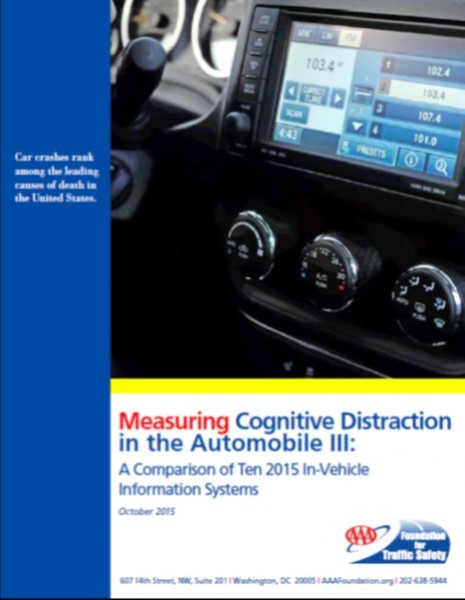
Researchers studying various push-to-talk technologies found that potentially unsafe levels of mental distraction lasted for as long as 27 seconds after completing a task in the worst-performing systems. And, at the 25 MPH speed limit in the study, drivers traveled the length of nearly three football fields during this time. Using the least distracting systems, drivers still remained impaired for more than 15 seconds.
The researchers discovered the residual effects of mental distraction while comparing the voice activated technology in ten 2015 vehicles and three types of smart phones. The analysis found that all systems studied increased mental distraction to potentially unsafe levels.
“Automakers often promote everything their connected cars can do, but this research paints a frightening picture of what drivers can’t do if they use the popular features” Parmenter says. “Hands free does not mean risk free. It’s that simple”.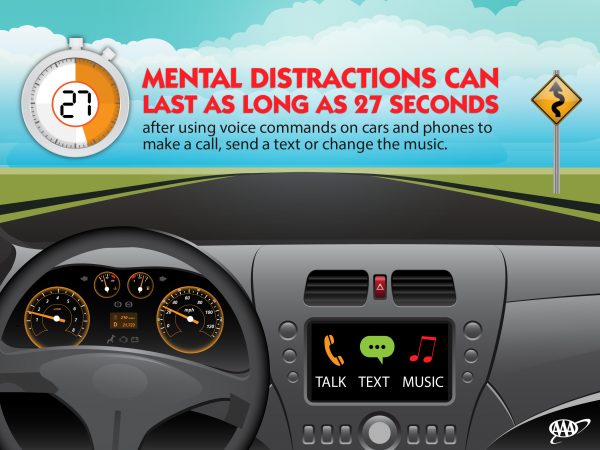
Last month, CT by the Numbers reported that in-car electronics that allow drivers to listen to, read and send text messages while at the wheel may be skirting the spirit, if not the letter, of Connecticut law. In Connecticut, Public Act 10-109, enacted in 2010, states that “no person shall operate a motor vehicle … while using a hand-held mobile telephone to engage in a call or while using a mobile electronic device while such vehicle is in motion. An operator of a motor vehicle who types, sends or reads a text message with a hand-held mobile telephone or mobile electronic device while such vehicle is in motion shall be in violation of this section.”
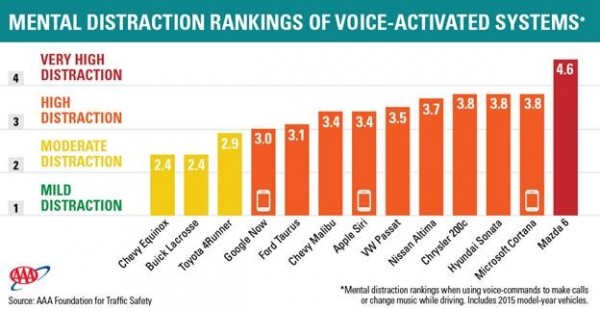
In the AAA study, researchers rated driver distraction on a scale of 1-5, with 1 being relatively safe, about equal to listening to the radio, and 5 being highly challenging in such a way as to overload the driver’s attention. The best performing system was the Chevy Equinox with a cognitive distraction rating of 2.4, while the worst performing system was the Mazda 6 with a cognitive distraction rating of 4.6.
The systems that performed best generally had fewer errors, required less time on task and were relatively easy to use. The researchers also studied voice activated smartphone technology and found that Google Now outperformed Apple Siri and Microsoft Cortana but, they say, all were dangerously distracting with ratings of 3.1, 3.4 and 3.8 respectively.
Dr. David Strayer and Dr. Joel Cooper of the University of Utah conducted the research. A total of 257 drivers ages 21-70 participated in the study of 2015 model-year vehicles, while 65 additional drivers ages 21-68 tested the three phone systems. Over the last two weeks, AAA has shared its findings with policymakers, safety advocates and manufacturers in hopes of improving the safety of future technology.

 sustainable lifestyle beverate brand for teens and tweens. The company's goal is to inspire young people to realize the power of consumer choices to effect social and environmental change.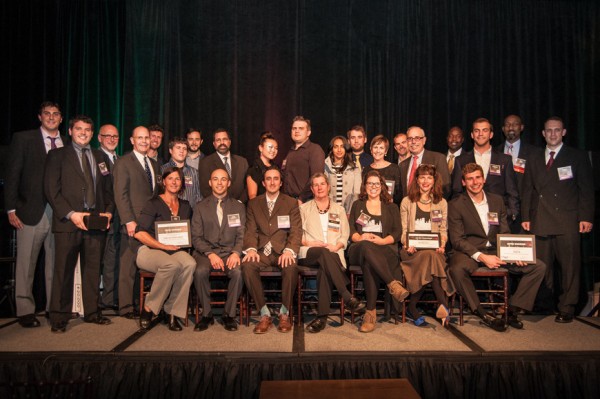
 The five awards judges - Sherrell Dorsey of Uber and Triple Pundit, Adam Dotson of Ironwood Capital, Claire Leonardi, an advisor to reSET's Social Enterprise Investment Fund and former CEO of Connnecticut Innovations, Anthony Price of LootScout and Paul Witinski of Ironwood Capital - narrowed down more than 100 applicants to 12 honorees. The People’s Choice winner was selected via more than 1,800 online votes.

 The organization is driven by volunteers – food donors, food runners and partner agencies. One such agency in Connecticut is the Manchester Area Conference of Churches, which indicates there are 8,000 food-insecure people in the greater Manchester area.

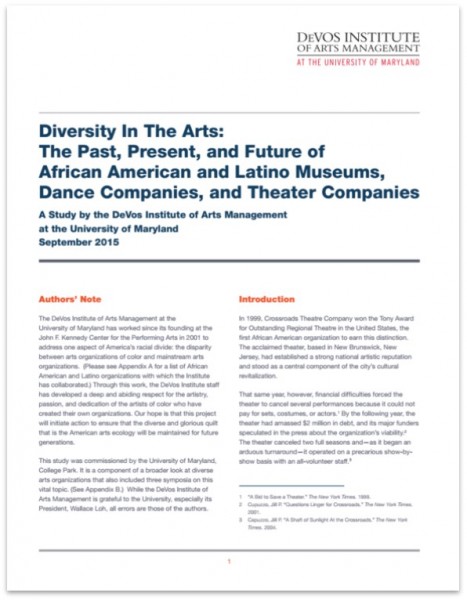
 A survey to which 29 of the 60 black and Latino arts groups in the study replied showed that the median percentage of donations coming from individuals was 5%. The norm is about 60% for big mainstream arts organizations. “This is the most important single statistic in the study,” the report says. Minority arts organizations also trailed when it came to box office receipts and other earned revenue. Earned money accounted for 40% of their revenue, compared with 59% for the big mainstream groups.
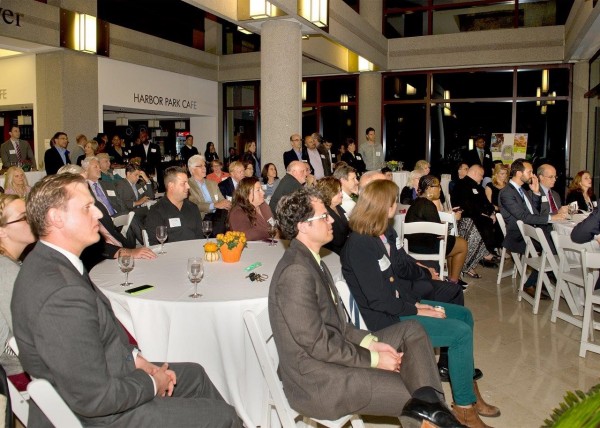 “I would like to congratulate all of the members of Stamford 2030 for joining together to make vital changes for our community," said Stamford Mayor David Martin. "The partners in Stamford 2030 have really stepped up for the success and sustainability of our city and the surrounding area. And they are not alone. For our part, the city is committed to improving storm resiliency and moving forward with the Energy Improvement District. We believe these efforts are tied to our economic development and ability to attract people to Stamford while conserving important natural resources, all necessary for sustained growth and prosperity.”






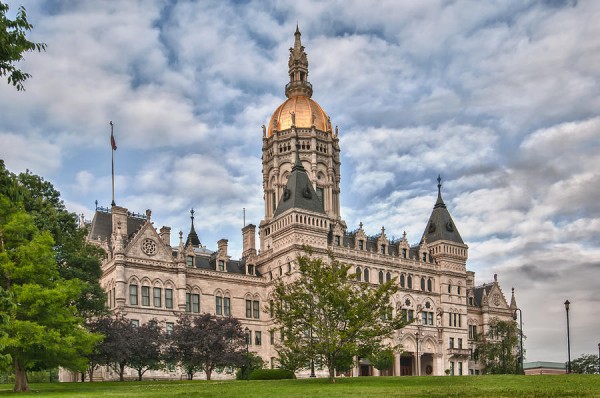 Alabama’s special session – the first in five years - was held over the summer, convening on July 13 and ending in disarray in mid-August, with a second special session on the state budget convened and concluded in mid-September. Among the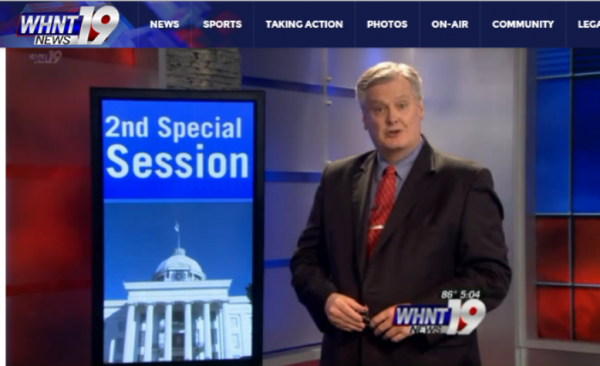
 Democratic legislative leaders and Republican legislative leaders are
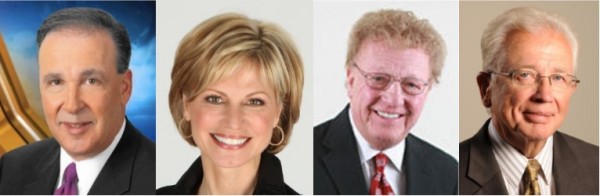 k of Connecticut network.
 7 through 2006, and continues to consult. He has also served multiple terms as chairman of the NAB. Prior to founding NewCity Communications, he was president of Katz Broadcasting Co.