

Landlines Continue to Disappear in CT and Nationwide, New Federal Data Shows
/
One-fifth of all adults and one-quarter of all children under 18 living in Connecticut reside in households that have wireless telephones but no landlines, according to data compiled in the National Health Statistics Report. For calendar year 2012, the most recent data available, 20.6 percent of adults age 18 and over and 25.4 percent of children under age 18 did not have a landline telephone in their home.
The report also indicates that in Connecticut, 20.6 percent of adults live in a wireless-only residence, 18.8 percent live in a mostly-wireless home, 32 percent live in a “dual-use” residence using both wireless and landline, 18.5 percent are mostly landline at home, and 9 percent have landline only.
Among children under age 18 in Connecticut, the growing dominance of mobile phones is evident, with nearly half in wireless-only (25.4 percent) or wireless-mostly (20.6 percent) households and 32.9 percent in dual-use residences. Only 11.8 percent and 8.4 percent describe their household as being landline-mostly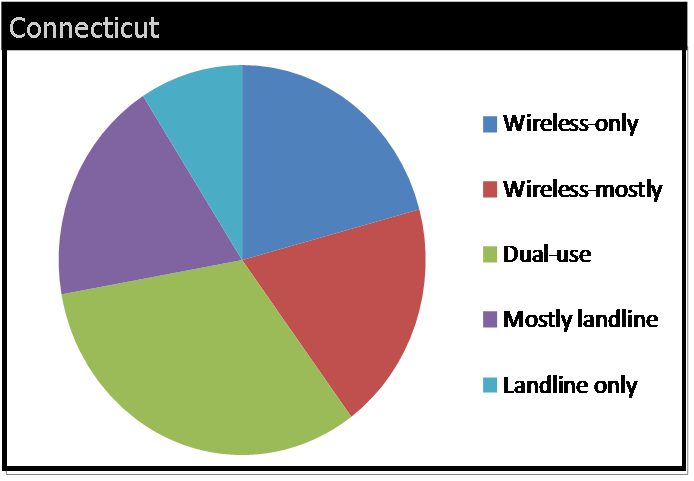 or landline-only.
The National Health Interview Survey is the most widely cited source for data on the ownership and use of wireless telephones. It is conducted by the Centers for Disease Control and Prevention’s National Center for Health Statistics, within the U.S. Department of Health and Human Services.
The report showed “great variation in the prevalence of adults living in wireless-only households across states. Estimates for 2012 ranged from a high of 52.3 percent in Idaho to a low of 19.4 percent in New Jersey. Other states in which the prevalence of wireless-only adults was relatively high (exceeding 45 percent) were Mississippi (49.4%), Arkansas(49.0%), and Utah(46.6%).
Several other states in the northeas t joined New Jersey with prevalence rates below 25 percent, including Connecticut (20.6%), Delaware (23.3%), New York (23.5%), Massachusetts (24.1%), and Rhode Island (24.9%).
Results showed a great variation in the prevalence of wireless-only children across states, ranging from a high of 63.4 percent in Mississippi to a low of 20.6 percent in New Jersey. Other states with a high prevalence of wireless-only children included Idaho (62.2%), Arkansas (59.8%), Missouri (55.2%), and South Carolina (54.5%). Other states with a low prevalence of wireless-only children included Vermont (24.5%), Connecticut (25.4%), Alaska (25.7%), and Massachusetts (26.7%).
The 2012 state-by-state data was released by the NHIS in December 2013. At the same time, the agency released composite national data for the first six months of 2013 that indicates 38.0 percent of U.S. adults lived in a household that has only mobile telephone service and no landline. As reported in the Huffington Post, their tracking shows that more than half of adults under age 35 and nearly two thirds (65.6 percent) of those ages 25 to 29 are cell-phone only.
The Pew Research Center, in a spring 2013 survey, found that ror the first time, cell phone ownership among adults has exceeded 90 percent. Cell phones are now being used by 91 percent of adults, according to the Internet & American Life Project survey conducted between April 17 and May 19 of 2,252 adults.

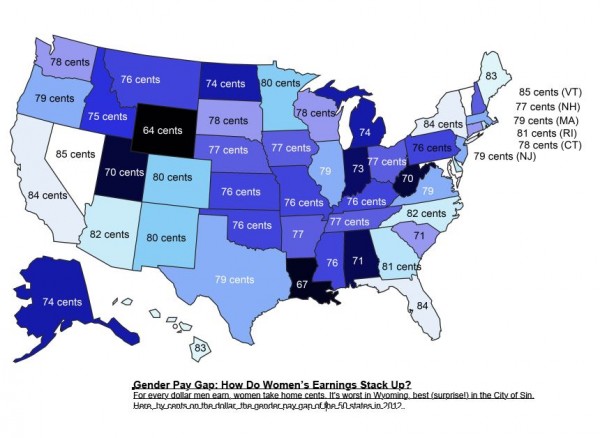 ogress is reflected in the total of 16 states in which women are now earning 80 cents or more to every male dollar, twice the count of 2010.
 wing Marion Kauffman Foundation. The
 Though they start lean, new high-tech companies grow rapidly in the early years, adding thousands of jobs along the way, according to the study findings. In fact, high-tech startup job creation is so robust that it more than makes up for the job destruction from early-stage businesses failures – a key distinction from the private sector as a whole where job losses from early-stage failures turns this group into net job destroyers, the report indicated.
 in the report, observed that “Each of the high density metro areas has one of three characteristics, and some have a combination of them all: 1) They are well-known tech hubs with highly skilled workforces, 2) They have a strong defense or aerospace presence, and 3) They are university cities.”
 , according to Payscale economist Katie Bardaro, “are dominated by high wage industries like tech (both IT and Biotech), finance or oil.” (Metro San Jose, San Francisco and Houston.) Unlike the top three, number 4 is dominated by the finance industry.
 workers there is $71,800 annually, while average starting pay is $55,500 and mid-career is $96,900 a year, on average, the magazine reported. Coming in at #7, the Hartford-West Hartford-East Hartford metro area has overall median pay of $69,200; starting median pay of $53,000; and mid-career median pay of $92,000.
 10.
 he state’s downtowns, one that commands attention and respect for being forward-thinking while preserving the integrity and values of the past. At CMSC, “we'll continue to promote the


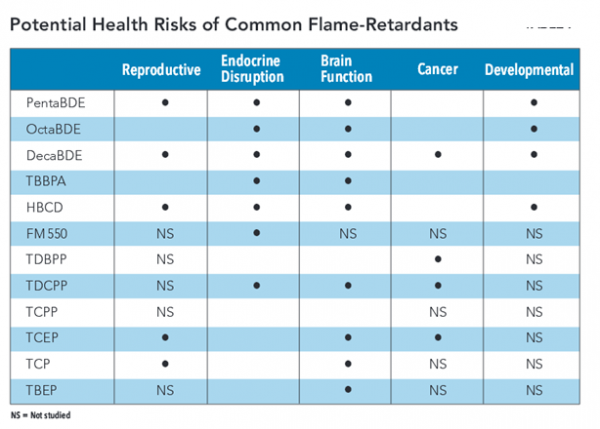
 n, president of Environment and Human health, Inc. “It is time for flame-retardants to be removed from all low fire-risk situations and products. As well, a certification program should be established where manufacturers certify the absence of flame-retardants, just as organic food programs certify the absence of pesticides.”
 g human health from environmental harms. EHHI does not receive any funds from businesses or corporations. The organization’s mission is “to conduct research to identify environmental harms affecting human populations, promote public education concerning the relationships between the environment and human health, and promote policies in all sectors that ensure the protection of human and environmental health with fairness and timeliness.

 During the past five years, inbound moves peaked in 2010 at 1,009 – with a just slightly higher 1,160 outbound moves. Since then, the numbers have skewed increasingly out-of-state, Atlas reported.

 ssistant marketing manager at Fallon Moving and Storage in Windsor, agreed. "Texas is big. We also do lots of Virginia, North Carolina and South Carolina," she said in a phone interview Friday afternoon.
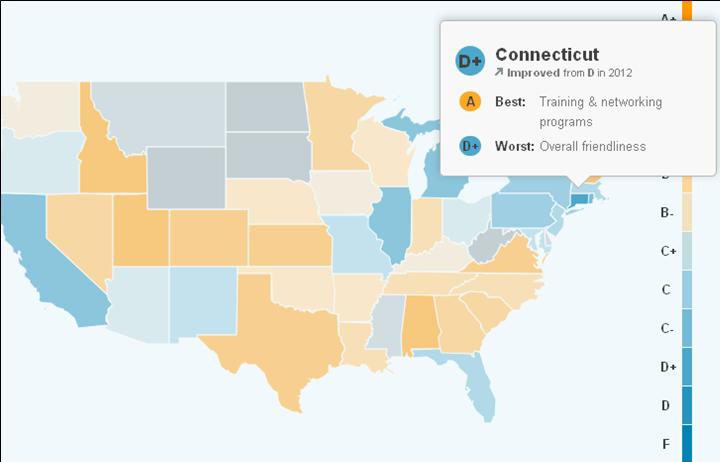 this year's study.

 ministration reports that 69% of small businesses are at least two years old, and 51% are at least five years old. The survey sample is very close to these numbers, with 76% over two years old and 57% at least five years old.
 ervices and treatments, and provide much needed education to those impacted by mental illness.

 may be a lifelong condition, like diabetes. “However, as with diabetes, proper treatment enables many people with a mental illness to lead fulfilling and productive lives. By helping combat the stigma associated with mental illness, we can help increase the number of people that seek treatment.”

 11. Virginia
12. Texas
13. Utah
14. Arizona
15. North Carolina
16. Illinois
17. Pennsylvania
18. Kansas
19. New Hampshire
20. D.C.




















